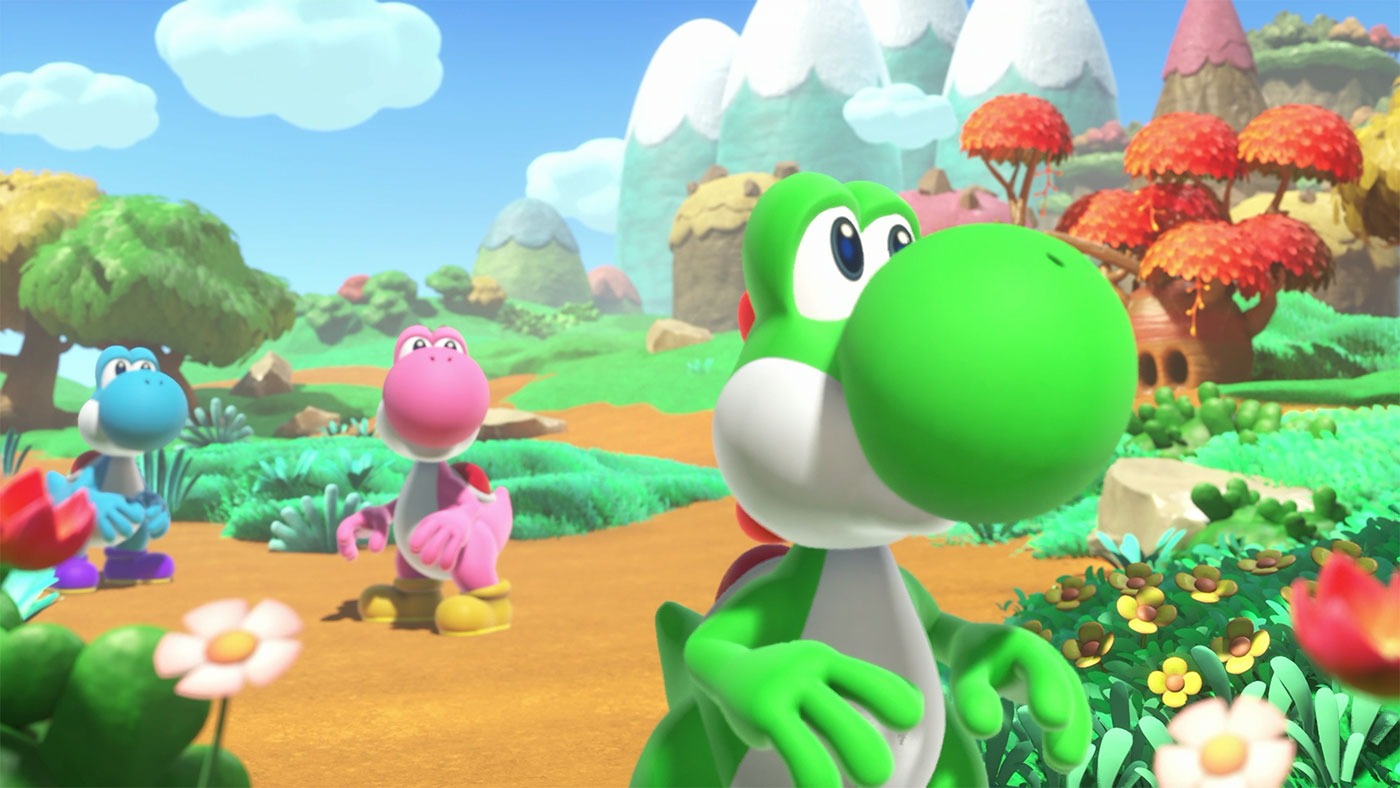

Use these tips when a chapter is locked, a flower counter is unfinished or a creature still has an empty discovery entry. The chapter walkthroughs contain the movement routes; this page explains how to plan return visits without repeating experiments already recorded.
Use Yoshi’s actions deliberately
- Tongue: taste creatures and pick up portable objects. Some creatures become eggs; others are too large or fixed in place.
- Tail Flick: carry creatures and activate nearby objects. Try it on leaves and suspicious scenery as well as the main creature.
- Ground Pound: test bouncing, splitting, retracting and breaking reactions. The same action can have a different result on soil, a leaf platform or a creature.
- Egg throw: reach high targets and Winged Clouds. Aim off walls when a direct throw cannot enter a small recess.
- Flutter Jump: use it near the top of a creature-assisted launch to extend the final reach. Fluttering early can interrupt the useful vertical lift.
Get enough discovery stars
Chapter gates use discovery stars, rather than the number of times you have played a level. When short, choose a creature with unfinished notes and try an interaction not yet recorded: a new food, a different environment, an object broken by its ability or a visiting creature.
A Big Discovery opens the regular exit. Entering the exit ends that visit; you can continue investigating first. Collect high or temporary-route flowers before changes such as Crudwurm losing its last armour piece.
Use the creature index and hints
Open the creature’s page and identify the empty entry before returning. Spend tokens on its hint if the silhouette does not make the intended experiment clear. Search the relevant part of the habitat, change one condition at a time and wait for the recorded result.
These guides use Mr. E’s suggested English names. If you renamed a creature, compare its picture and chapter rather than expecting your custom name to appear in the walkthrough.
Discovery events worth revisiting
The book marks return events as more creatures are introduced. These pairings are useful starting points when an earlier page remains incomplete.
| Return habitat | Visiting creature or interaction |
|---|---|
| Bunchabee | Glubbit |
| Scatterpuff | Detonut |
| Milde | Detonut |
| Floofly | Plumebrella |
| Plumebrella | Wash Squash |
| Casterway | Bafloonder |
| Ouchin | Casterway |
| Shy Guy | Bugya |
| Bugya | Slugarang |
| Little Mouser | Weewoo |
| Swirm | Tumball |
| Stickiwick | Floofly |
| Lunge Fish | Bafloonder |
| Underbit | Hauger |
| Wiggaline | Tumball |
| Bounseed | Bugya |
| Grab-Grass | Wooshwing |
| Spincone | Loopdeecoop |
Plan the postgame
- Finish the first six chapters and their main discoveries.
- Continue through Underground, Tallest of Trees, Miniworld and Moon, meeting their star requirements.
- Return for unfinished habitat flowers and marked discovery events. The Moon’s lower-right buried flower is a return-visit task.
- Reach 717 stars and finish the Special Studies. Measure the different forms, try each racer and save all five Crazee Dayzees on the escort course.
- Reach 999 stars for Mr. E’s Challenges. Complete each challenge and collect its flowers on a planned repeat if the movement sequence is difficult.
- Check the book’s individual counters before considering the collection finished.
Commonly missed distinctions
- Bafloonder: finding the nest is the regular goal; returning all five young is an additional task.
- Huffin Puffin: six young allow the first clear, while the additional rescue observation needs all eight.
- Billeau: spreading gas to the required creature groups is the main goal; igniting it is a separate puzzle.
- Crudwurm: rescue Bowser Jr. and Kamek before stripping every piece of armour. Take the high flower while the armoured body is available.
- Gobbobble: freeing both captives and defeating all three phases are separate milestones.
- Special Studies: Chapter 11 has no flowers. Its optional measurements and experiments still matter for discovery progress.